
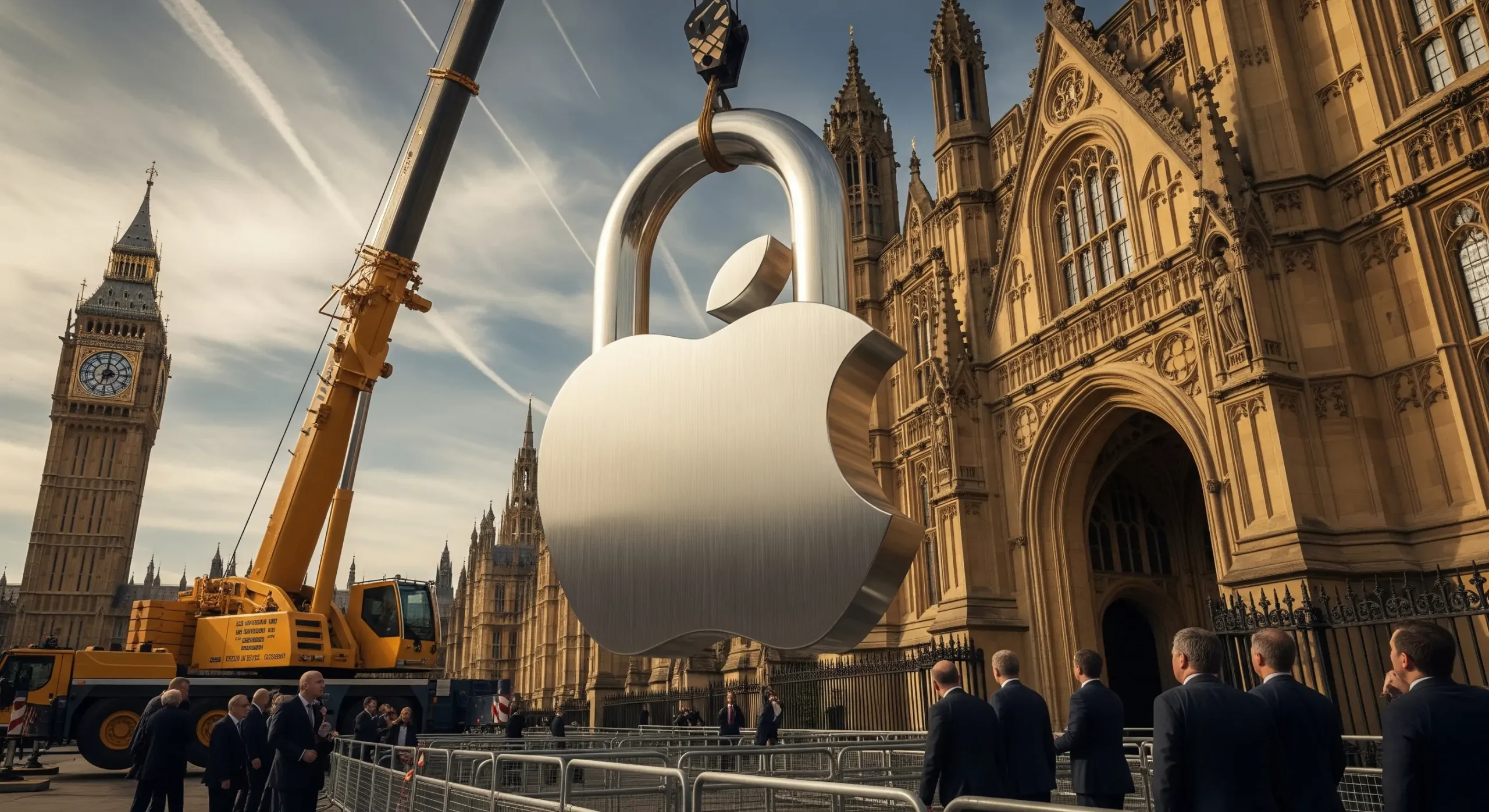
The standoff between Apple and the UK government has reached a stunning, unexpected conclusion. Faced with a UK government mandate to build a backdoor, Apple made a drastic choice that has ignited a fierce online debate. The reality now is that Apple disables encryption for its most advanced data protection features in the UK. This move has some praising Apple’s transparency, while others call it a PR stunt that ultimately harms user security. Apple’s decision has created a new, uncertain reality for data privacy in the United Kingdom.
Apple’s Choice: Advanced Data Protection Disabled in the UK
In response to the UK government, Apple took a direct and controversial step. The company chose to turn off its Advanced Data Protection (ADP) feature for all UK customers. This decision was a direct consequence of the UK’s Investigatory Powers Act, which was updated to potentially force companies like Apple to secretly break their own encryption. By disabling the feature, Apple found a way to comply with the law without creating a dangerous vulnerability for its global user base.
Apple publicly expressed its grave disappointment with the situation. The company stated it could no longer offer these advanced protections to its UK customers, especially given rising data security threats. However, officials reiterated their unwavering commitment to user privacy. Apple’s long-standing policy is to never build a backdoor into any of its products, and they affirmed that this will never change. The company remains hopeful it can re-enable these features in the UK in the future.
How iCloud Services Stand After Apple Disables Encryption
With Advanced Data Protection now off, the security level for many iCloud services in the UK has changed. Specifically, a long list of services that were previously protected by end-to-end encryption will now revert to standard data protection. This means Apple will hold the encryption keys and can be compelled to turn over that data. The affected services are:
- iCloud Backup
- iCloud Drive
- Photos
- Notes
- Reminders
- Safari Bookmarks
- Siri Shortcuts
- Voice Memos
- Wallet Passes
- Freeform
However, it’s important to note that not all services were downgraded. Apple has kept end-to-end encryption active for its most sensitive data categories, even in the UK. These include your iCloud Keychain for passwords, Health data, and communication services like iMessage and FaceTime.
Why Apple Disables Encryption Instead of Building a Backdoor
Apple’s decision is rooted in a core principle the company has defended for over a decade. The company has a strict, long-standing policy to never build a backdoor or master key into any of its products. Security experts agree that a backdoor created for the government is also a backdoor for criminals and foreign spies. Creating such a tool would introduce a catastrophic vulnerability for every user. Therefore, from Apple’s perspective, complying with the backdoor mandate was never an option.
Instead, the company chose what many in the community are calling the lesser of two evils. Rather than secretly weakening their systems, Apple Disables Encryption for these features in a very public way. This decision, while damaging to UK users’ privacy, is an act of transparency. UK customers now know exactly where their security stands, instead of being lied to with a compromised system. It’s a loud protest against the law, forcing a public conversation about government overreach.
A Community Divided: “Good Job!” or “PR Stunt”?
Apple’s decision was met with a mixed response from the privacy community. One side praised the move as a necessary and transparent choice. Supporters of this view argue that it is the ‘lesser of two evils’. They believe it is better for Apple to be public and honest about the reduced security in the UK. This way, customers are not given a false sense of security with a system that has a secret backdoor.

However, many others in the community view the action with deep skepticism. They label it a calculated public relations move rather than a genuine defense of privacy. These critics contend that by disabling end-to-end encryption, Apple has ultimately given the UK government what it wanted: a legal path to access user data. Some described this metaphorically, suggesting Apple didn’t open the back door, but simply left the front door unlocked. From this perspective, the move is seen as compliance disguised as defiance.
The New Reality for Data Privacy in the UK
Apple’s decision has created a new, stark reality for its customers in the United Kingdom. With Advanced Data Protection disabled, many iCloud services now have a lower level of security than those enjoyed by users in the rest of the world. This effectively creates a two-tiered privacy system within Apple’s global ecosystem. UK users, as a direct result of their government’s legislation, now have fewer protections for their personal data.
However, this approach has achieved one of Apple’s key strategic goals. By refusing to build a universal backdoor, the company has successfully contained the issue, ensuring the security of its global user base remains uncompromised. Apple’s move effectively frames the loss of privacy as a domestic political issue. It is now a matter between UK citizens and their own government’s surveillance laws, not a technical vulnerability that compromises everyone. This standoff marks a new, more direct front in the ongoing war between global technology platforms and national governments.
