
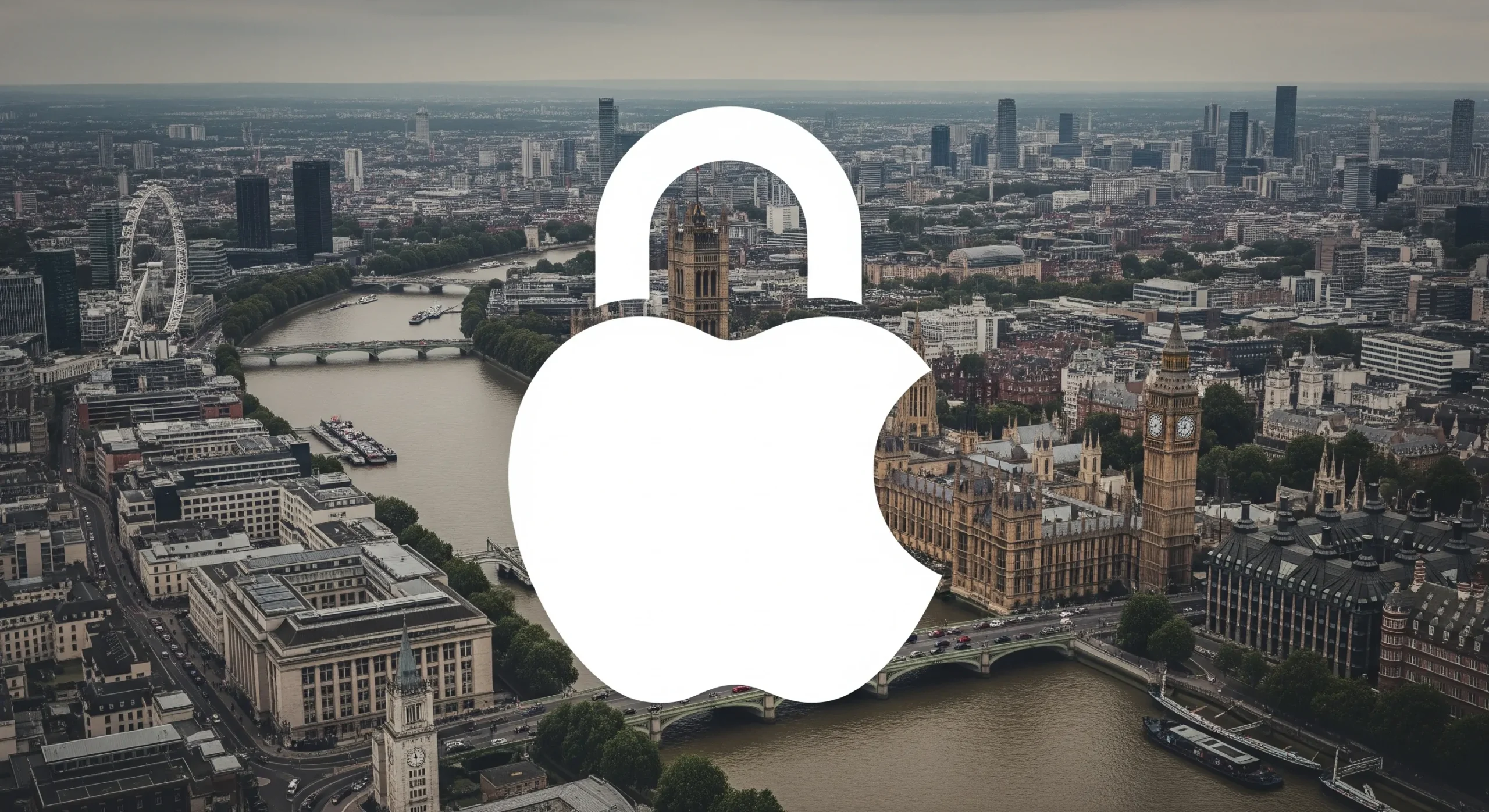
The privacy and security of your personal data is a cornerstone of the Apple ecosystem, a promise of protection trusted by millions. The British government is challenging this fundamental belief. Officials have formally ordered Apple to create a way to bypass its own security. This backdoor demand in the UK is a very serious move. It would force Apple to break the powerful encryption that protects you. And more, this action creates a massive fight between the UK and the world’s top tech company. Ultimately, the privacy of your data is now at risk everywhere.
The Government’s Unprecedented Ultimatum
The UK’s Home Office has delivered a formal notice to Apple. The action is a direct and forceful use of power. It comes from the controversial Investigatory Powers Act. This government’s demand is clear and unprecedented, as they are ordering Apple to build a ‘backdoor’ into its secure systems. In short, this creates a secret method to bypass the digital locks protecting user data.
Officials argue this tool is for national security. They claim it would only be used in targeted cases, for instance, to fight terrorism and serious crime. However, security experts warn this is a dangerous fantasy. You cannot build a backdoor just for the ‘good guys.’ Any secret key can be copied, stolen, or abused by criminals and foreign states. This would create a fundamental weakness in Apple’s security for every single user.
Why the Backdoor Demand in the UK Threatens Global Privacy
End-to-end encryption is the bedrock of modern digital privacy. It functions much like a sealed letter, as only the sender and recipient can read the contents. Even the service that carries the message, in this case Apple, cannot see inside. This is the core technology protecting everything from private messages to your financial data. The UK’s order, therefore, is a demand to break that digital seal, which would render the promise of true privacy meaningless for its citizens.
Furthermore, the consequences of this action extend far beyond the UK’s borders. Technology and security operate in a world without frontiers. If Apple is forced to create a backdoor for one government, it creates a powerful blueprint that every other government will want to copy. It would become nearly impossible for the company to reject similar orders from nations with far worse human rights records. In essence, the backdoor demand in the UK serves as a test case that could unlock a floodgate of surveillance demands worldwide.
Inside the Investigatory Powers Act
This government action is not random. It is rooted in a specific and powerful law: the Investigatory Powers Act. This act was passed in 2016. It is widely known by its critics as the “Snooper’s Charter.” The law gives UK intelligence agencies and police some of the broadest surveillance powers in the democratic world.
Crucially, the law allows for “technical capability notices.” These notices can force tech companies to build tools that help with government surveillance. In this case, it gives the Home Office the legal power to demand Apple bypass its own encryption. Tech companies, including Apple, warned about this very outcome when the law was debated. Those long-held fears have now become a reality.
The Dangerous Precedent Set by the Backdoor Demand in the UK
The immediate conflict is with the UK. However, the true danger lies in the global precedent this action could set. This is not the first time Apple has faced such a demand. In 2016, the company famously fought a court order from the FBI. The FBI wanted to unlock an iPhone from a terror suspect in San Bernardino. Apple argued that creating a tool to bypass security would be like making a “master key.” Such a key, if it fell into the wrong hands, could endanger millions of users.
That standoff ended without a clear legal ruling. Now, this new situation reopens the same critical debate. If a democratic country like the UK succeeds, it gives political cover to authoritarian regimes. They will surely demand the same access. The backdoor demand in the UK would be cited in courtrooms all over the world. This makes it nearly impossible for Apple to say no to other countries. The situation is therefore far more than a regional issue. It is a critical test case for the future of global privacy.
The Digital Iron Curtain: A Standoff Begins
Ultimately, this is more than just a technical dispute. It is a fundamental conflict of modern ideologies. On one side, the UK government asserts its duty to protect citizens by any means necessary. On the other side, however, Apple stands on its core promise to protect the privacy of all its users. The company argues that true security simply cannot have exceptions or backdoors.
As a result, an invisible, digital Iron Curtain is now descending. This threatens to divide the open, global internet. It could become a patchwork of regulated and surveilled national networks. Apple, therefore, finds itself in an incredibly difficult position. The company is caught between the laws of a major country and its global promise to hundreds of millions of users. In conclusion, the monumental decision Apple makes next will not just affect its business. It will define the future of privacy in our connected world.
