
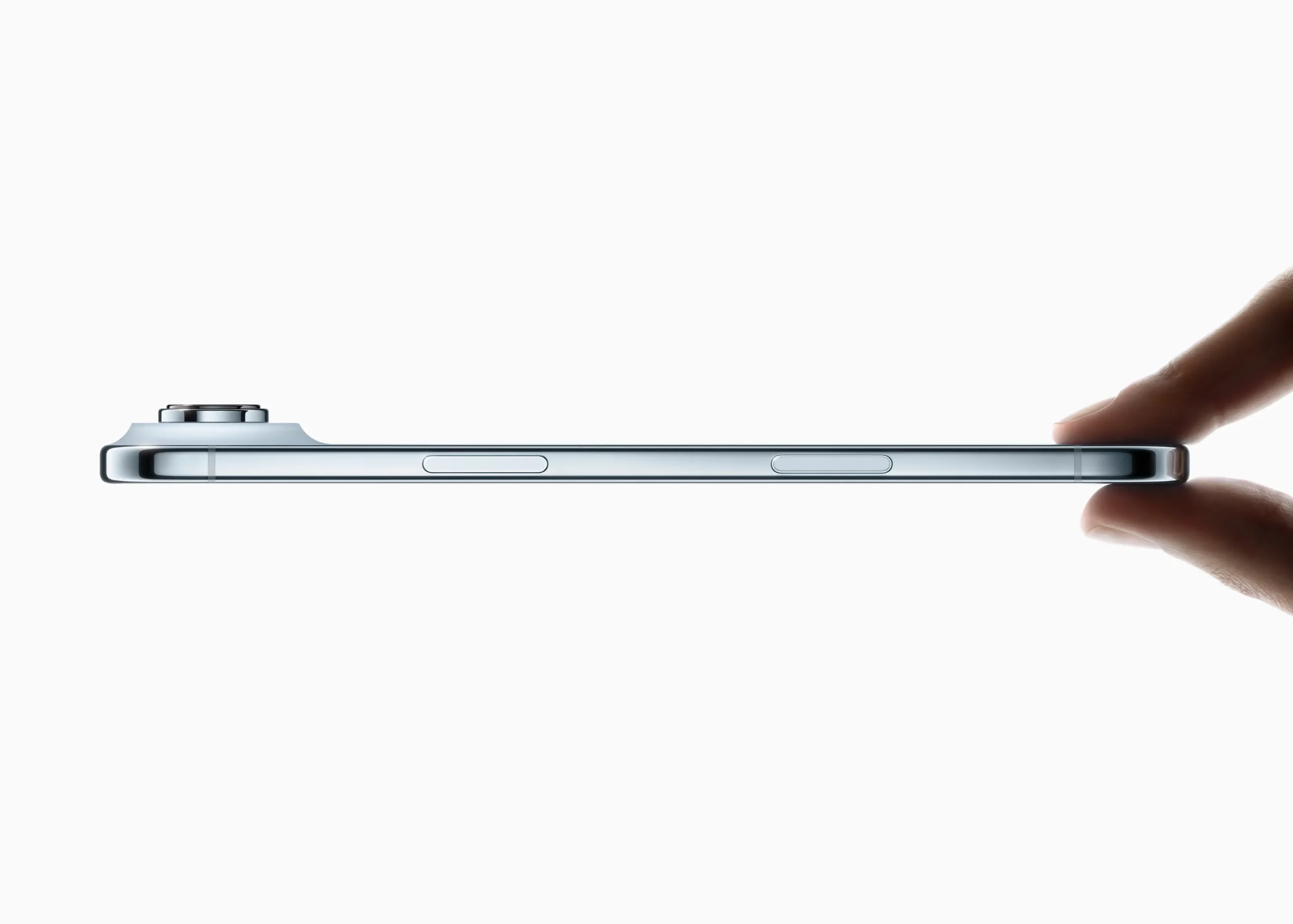
Featured image: The new iPhone Air, the thinnest iPhone ever made. Photo by Apple.
Apple unveiled its latest product, the new iPhone Air. This device now sets a new bar as the thinnest iPhone the company, or anyone, has ever made. It is a big step forward in mobile design and pushes the limits of what is possible.
The phone is a great design marvel, mixing a sleek look with strong materials. As a result, it offers a special blend of style and toughness that is new to the market. Apple focused on making a device that feels as good as it looks.
The New iPhone Air Redefines Smartphone Design
The new iPhone Air measures an amazing 5.6mm in thickness. This great feat is possible due to a new grade 5 titanium frame. The material offers great strength while staying very lightweight, and it has a beautiful high-gloss finish.
This slim design does not, however, reduce its toughness. Apple also added Ceramic Shield 2 on the front glass. This new material gives much better protection from everyday scratches and cracks, helping the device stay tough for daily use.
A Display That Shines Brighter Than Ever
The new iPhone Air features a large 6.5-inch Super Retina XDR display. It is also the brightest screen ever on an iPhone. This new display reaches an amazing 3000 nits of peak outdoor brightness which makes the screen incredibly easy to see, even in direct sunlight.
Scrolling now feels incredibly smooth, thanks to ProMotion technology. As a result, the screen intelligently adapts its refresh rate up to 120Hz for fluid motion. It can also scale down to just 1Hz for the Always-On display, which in turn saves valuable battery life.
Unlocking Pro-Level Performance
Inside, the new iPhone Air is very powerful. This is the first iPhone model to feature three new, custom-designed Apple chips working together. This required a complete redesign of the internal layout to make space for all the new technology. Apple’s goal was to pack more power into a much thinner device while also boosting its efficiency.
The Powerhouse A19 Pro Chip
The new A19 Pro chip sits at the heart of the device. This is not just a minor update; it represents a huge leap in processing power. The 6-core CPU is built with two high-performance cores that tackle demanding jobs, and four high-efficiency cores that handle everyday tasks to save power.
This raw power is the engine behind many of the iPhone Air’s standout features. The A19 Pro handles the complex AI calculations for the new Center Stage camera in real time, for example. It also makes pro-level features like Dual Capture possible, allowing the phone to record video from two cameras at once, a task that was too intensive before. Gamers will see a massive benefit as well, with a new GPU that brings console-level graphics to a mobile device.
Next-Gen Connectivity with N1 and C1X
The iPhone Air further features two more custom chips that complete its performance story. The N1 is a new Apple-designed wireless chip. It brings support for the latest standards, including Wi-Fi 7, Bluetooth 6, and Thread, improving the overall performance and reliability of features people use daily, such as AirDrop and Personal Hotspot.
The second chip, the C1X, is Apple’s brand-new cellular modem. After years of development, Apple has created its most power-efficient modem ever for an iPhone. It is up to two times faster than the previous generation and uses 30% less energy. This means users get faster downloads and streaming, all while conserving precious battery life.
A Revolutionary Camera System in the New iPhone Air
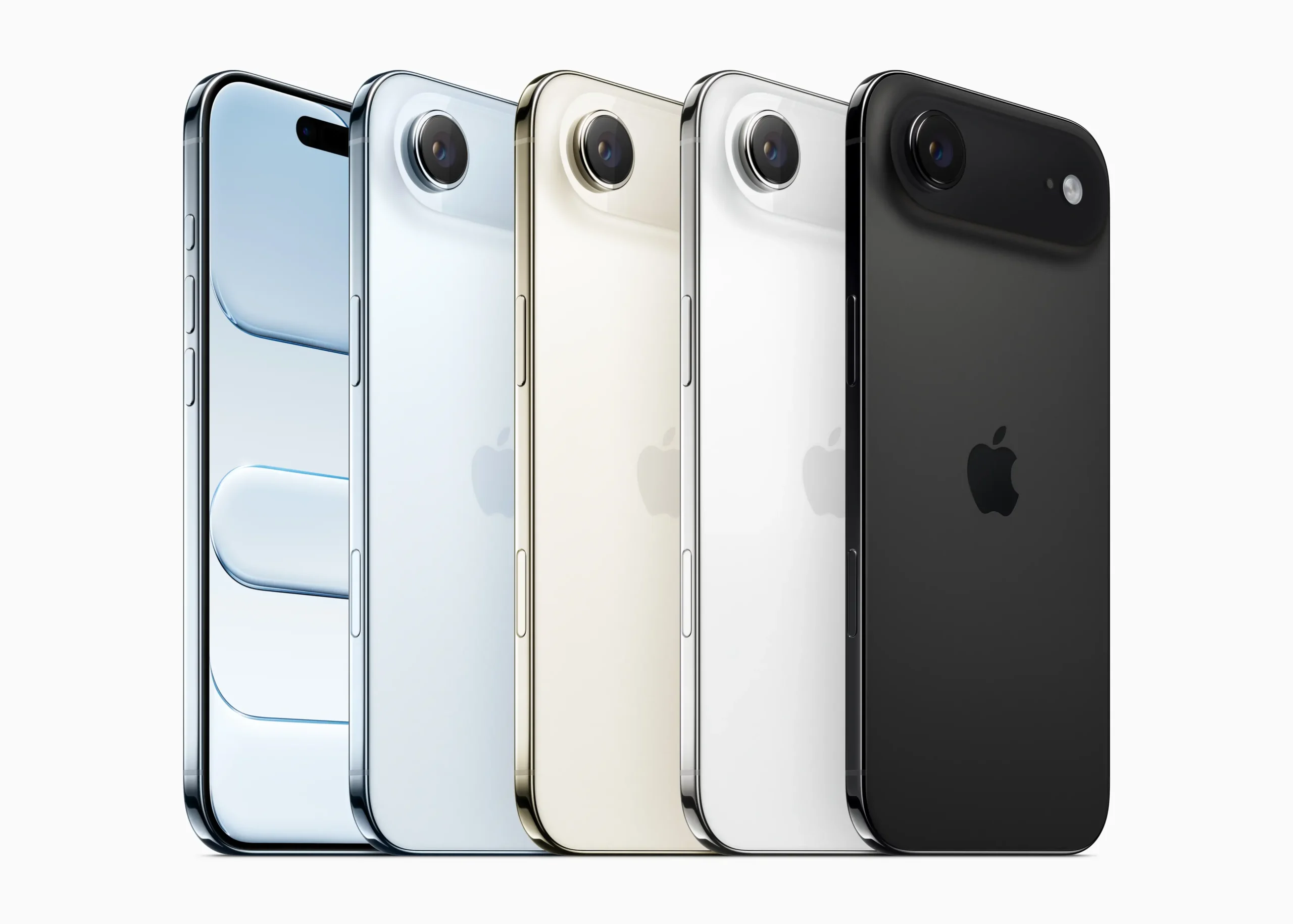
Apple went back to the drawing board and redesigned the camera system in the new iPhone Air, adding new hardware and software. The redesign advances both photo and video, led by an innovative Center Stage front camera with a unique square sensor and a new 48MP Fusion rear camera.
These powerful cameras use a new image pipeline that brings improved controls, such as the ability to add portrait effects after a photo is taken. Additionally, Apple is bringing a new rear design, the plateau, where all the components fit tightly together.
The 48MP Fusion Main Camera in the new iPhone Air
The rear camera system is built around a new 48-megapixel Fusion sensor. This large 2.0µm quad-pixel sensor, paired with sensor-shift optical image stabilization, excels in low light. In darker environments, it merges four pixels into one to capture far more light, producing brighter and cleaner images.
This system is very flexible and gives users the power of multiple lenses. The fusion main lens now offers the choice between the classic 28mm and 35mm focal lengths to frame their shots perfectly. For getting closer to a subject, an optical-quality 2x Telephoto option is available. This zoom benefits from an updated Photonic Engine, which captures more details and richer color.
Innovative Center Stage Front Camera
The front camera sees the most radical change, with a new 18MP sensor that is the first-ever square sensor on an iPhone. This innovation allows users to take landscape-oriented photos and videos while still holding their phone vertically, a huge convenience.
An advanced AI called Center Stage for photos powers this feature. For group shots, it automatically expands the field of view to fit more people. It can even intelligently rotate the framing from portrait to landscape to ensure everyone is included in the photo.
Pro-Level Video and Photo Software
The new iPhone Air captures stunning video, with support for 4K at 60 fps in Dolby Vision, as well as Action mode for ultra-stable shots. A new Dual Capture feature allows users to record from the front and rear cameras at the same time, perfect for creators. Video sound is also improved, with Spatial Audio capture, wind noise reduction, and a new Audio Mix feature that lets users adjust voices and ambient noise after recording.
A new image pipeline enables next-generation portraits with Focus Control while the system automatically captures depth information with every photo. This allows users to go back into the Photos app later and turn any standard picture into a beautiful portrait with an artistic background blur.
The Strategic Shift to an eSIM-Only iPhone
The new iPhone Air marks a major change for the product line. Apple has removed the physical SIM card tray entirely. This makes the device an eSIM-only phone, which is a first for any iPhone model.
This change was a key part of the phone’s new design. Removing the SIM tray freed up valuable space inside the device. This extra room, in turn, helped engineers fit a larger battery while also making the phone much thinner.
An eSIM also offers other benefits for users. It is more secure than a physical SIM card because a thief is unable to remove it if the phone is lost or stolen. Setting up or switching carriers is also much easier. You can do it digitally in just a few minutes without needing to visit a store.
A New Ecosystem of Accessories
Apple is introducing a new line of accessories designed to perfectly complement the bold design of the new iPhone Air.
- iPhone Air Case with MagSafe: This case has an ultra-thin, clear design with a lightly frosted inside and a glossy outside. It is available in frost and shadow colors. A strong polycarbonate frame helps protect the iPhone Air from scratches and drops.
- iPhone Air Bumper: For those who want simple edge protection, this slim and light bumper comes in four colors that match the phone. It uses a reinforced design to guard the edges against damage.
- iPhone Air MagSafe Battery: This thin and light battery pack attaches seamlessly to the back of the phone. It quickly charges the iPhone Air and can deliver up to 40 hours of total video playback when used together.
- Crossbody Strap: Made from 100% recycled yarns, this comfortable strap has embedded magnets and steel sliders to easily adjust the length. It will be available in 10 colors, including black, blue, purple, and green.
How the New iPhone Air Advances Sustainability
The new iPhone Air is a big part of Apple’s 2030 goal to be carbon neutral. The company is focusing on using better materials, cleaner power, and smarter shipping to reach this goal.
The phone itself is made with 35% recycled parts. The titanium in its frame is 80% recycled, which is a new record for an iPhone. The battery also uses 100% recycled cobalt. Even the USB-C port is special. Apple 3D-prints it from titanium, a new method that uses 33% less metal.
Clean energy also helps build the phone. Apple uses 45% renewable power, like wind and solar, in its supply chain. The phone’s box is made from paper and can be fully recycled. Apple also built the iPhone Air to last a long time and be easy to fix, all while using less power.
