
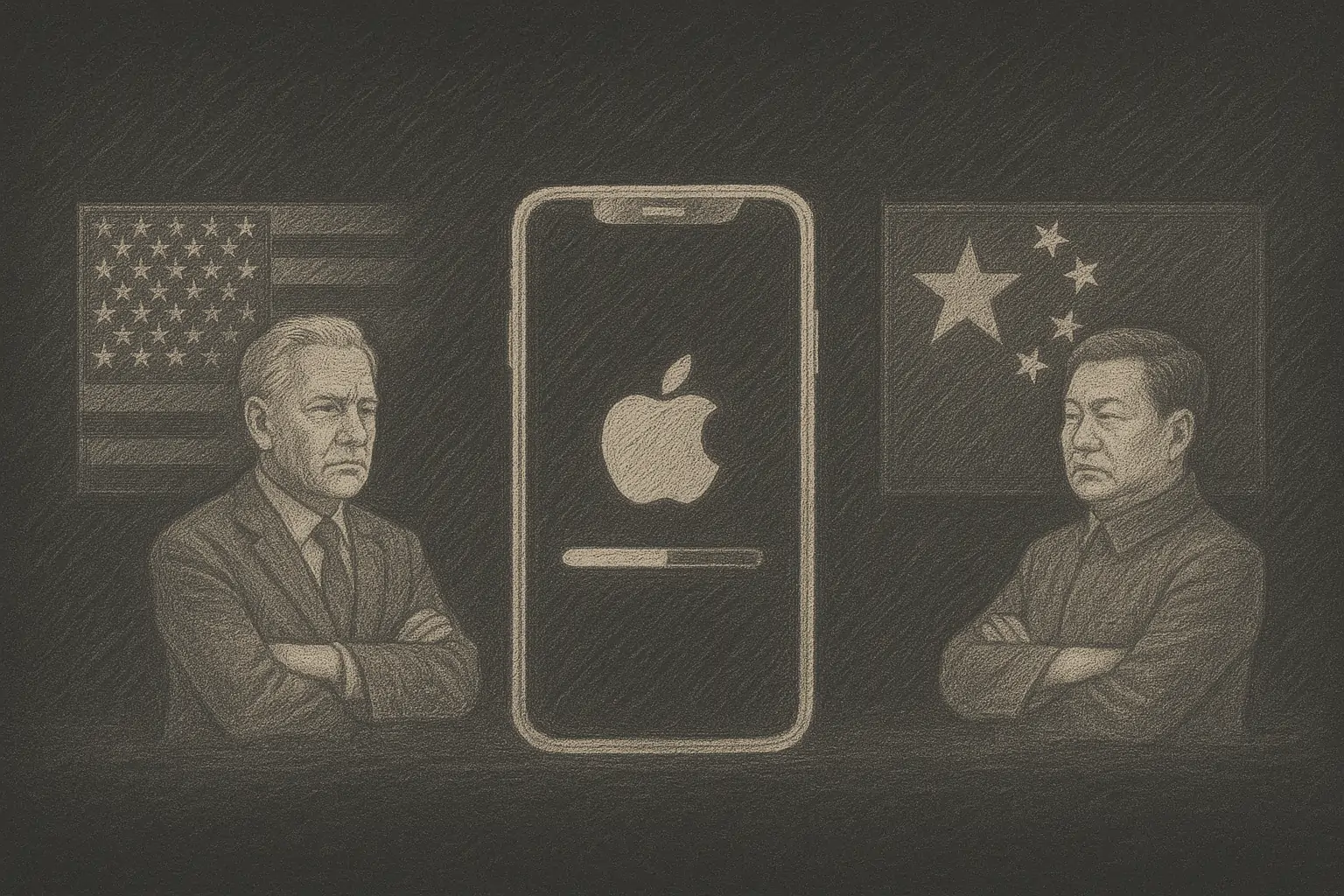
As the U.S. grapples with rising commercial instability and escalating trade tensions, Apple finds itself at the intersection of global politics and consumer technology. Recent headlines — from threatened 25% tariffs on iPhones manufactured outside the U.S. to political pressure on Apple to shift production away from China — have put the company under intense scrutiny. Yet, while Apple faces undeniable challenges with this trade war, the story isn’t just one of obstacles; it’s also a testament to resilience, adaptability, and the potential for economic opportunity amid uncertainty.
In this extended article, we explore how Apple is navigating the evolving U.S. trade landscape, the potential consequences for its global operations, and how its strategies may ultimately safeguard both its business, investors, and its loyal customer base.
Understanding the Trade Pressures
According to Time and NBC News, President Trump has pushed for Apple to manufacture more iPhones in the United States, threatening significant tariffs on devices assembled abroad. The core argument behind this push is that overdependence on foreign manufacturing weakens the U.S. economy by exporting jobs, knowledge, and economic influence to other nations, particularly China. Bringing production back could strengthen domestic manufacturing, create American jobs, stimulate local economies, and reduce geopolitical vulnerabilities.
However, transitioning such a complex, globally integrated operation is no small feat. Apple’s supply chain is deeply entrenched, with decades of specialized supplier relationships, high-tech facilities, and labor pools built across Asia. Moving production means more than building factories; it requires rebuilding expertise, retraining workers, and creating a parallel infrastructure capable of matching the precision and scale of Apple’s current operations.
The Impact on Apple’s Supply Chain
The threat of tariffs introduces logistical headaches, potential delays, and cost increases. Apple’s supply chain operates with surgical precision, relying on just-in-time deliveries, component specialization, and geographic proximity among suppliers. Adding tariffs or forcing production relocations threatens to disrupt these systems, risking bottlenecks, quality control issues, and timeline delays.
Yet, Apple’s longstanding experience managing global complexity gives it a unique edge. As The New York Times notes, Apple has already taken steps to diversify its manufacturing footprint, expanding production in India and Vietnam. This not only reduces exposure to any one country’s political climate but also offers access to new consumer markets and emerging regional expertise.
Moreover, investing in flexible supply chain models, including multi-sourcing strategies and distributed production, could allow Apple to pivot more quickly when geopolitical winds shift — a move that could pay dividends well beyond the current trade standoff.
Balancing The Trade War Challenges with Opportunity
While tariffs pose short-term pain, they also present longer-term opportunities. If Apple were to expand U.S. manufacturing, it could generate goodwill among policymakers, boost its reputation as a domestic job creator, and strengthen ties with local suppliers. These shifts could also unlock potential tax incentives, government partnerships, and a stronger position in shaping future industrial policy.
Of course, U.S. manufacturing comes with higher labor costs and a need for significant capital investment. But Apple’s robust cash reserves, advanced engineering, and history of driving production efficiencies position it well to tackle these hurdles. By leveraging automation, advanced robotics, and cutting-edge materials, Apple could transform high-cost U.S. manufacturing into a showcase of next-generation production.
The Consumer Angle: Will Prices Rise?
One major concern raised by CNBC is whether increased costs from tariffs and reshoring will be passed on to consumers. While this risk exists, Apple’s scale and supply chain leverage allow it to absorb many shocks internally, smoothing impacts across product lines. Additionally, Apple has shown an ability to balance margins through product mix adjustments, supplier negotiations, and strategic cost optimizations.
Notably, Apple’s growing services business — encompassing iCloud, Apple Music, Fitness+, and more — provides an important buffer, reducing the company’s reliance on hardware profits alone. This diversified revenue base makes it easier for Apple to navigate hardware cost pressures without jeopardizing its overall profitability.
Economic Resilience Through Innovation
Apple’s enduring strength lies in its innovation mindset. Confronted with trade challenges, the company can harness its ecosystem advantage — integrating hardware, software, and services into a seamless experience that commands consumer loyalty and justifies premium pricing.
By investing in automation and AI-enhanced manufacturing, Apple can potentially reduce labor costs, improve efficiency, and maintain product quality, even under reshoring pressures. These innovations not only help Apple respond to today’s challenges but also position it at the forefront of the future of advanced manufacturing.
Global Implications and Apple’s Leadership Role
Apple’s approach to U.S. trade tensions has global ripple effects. As one of the world’s most influential tech companies, its strategies set industry benchmarks. Apple’s careful navigation between U.S. policy demands, Chinese manufacturing partnerships, and Indian growth opportunities highlights the delicate balance required in a fragmented global economy.
Furthermore, Apple’s leadership on issues like sustainability, responsible sourcing, labor rights, and supply chain transparency enhances its reputation as a company committed to ethical practices. By framing its supply chain decisions as not just economic, but ethical and strategic, Apple strengthens its global brand even in uncertain times.
Can Apple Protect Consumers From This Trade War?
While no company can fully insulate customers from the ripple effects of global trade instability, Apple is uniquely positioned to soften the impact. Its combination of financial strength, brand power, and product ecosystem enables it to manage cost pressures, maintain consistent product quality, and preserve user experience.
Apple’s customer base, which is accustomed to premium pricing and places high value on quality and innovation, offers additional flexibility. By focusing on innovation, integrating cost-saving technologies, and enhancing value through services, Apple can continue delivering compelling products without drastic price hikes — protecting consumer trust and loyalty even as external pressures mount.
Navigating Uncertainty with Strength
The intersection of U.S. trade policy and Apple’s global operations is complex and fraught with challenges, but it also presents opportunities. Apple’s ability to adapt — through strategic diversification, technological investment, and a steadfast focus on customer experience — positions it as a company well-equipped to weather the storm.
While tariffs and political tensions are real, they also create moments for leadership and reinvention. Apple’s track record suggests it can rise to meet these challenges, turning obstacles into stepping stones toward a more resilient, innovative future.
What do you think of Apple’s position in the current global trade climate? Share your thoughts in the comments.
