
Apple Home and the HomeKit framework has evolved into a powerful platform that controls millions of smart devices across homes worldwide. From simple light switches to complex security systems, the app finally delivers the seamless experience users have wanted for years. What started as a fragmented framework has transformed into a streamlined command center for modern living.
The platform’s journey from HomeKit’s troubled launch to today’s elegant solution reveals important lessons about smart home technology. Apple Home now supports Matter devices seamlessly, provides end-to-end encryption for privacy, and offers an intuitive interface that makes control surprisingly simple. These improvements directly address the reliability issues that frustrated early adopters.
Understanding how Apple conquered smart home complexity helps explain why the platform now leads in both simplicity and security. Each major update solved specific problems that real users faced, building toward today’s refined experience. Let’s get to know more and explore the evolution of Apple Home.
When Apple Home Started as HomeKit’s Awkward Beginning
HomeKit launched in 2014 as a framework without a face, leaving users confused from the start. Apple announced the technology at WWDC with grand promises, but customers couldn’t control their devices through a dedicated Apple app. Instead, they had to rely on third-party applications or Siri commands that often misunderstood basic requests.
The smart home market was already fragmented, and HomeKit made things worse initially. Device manufacturers faced a confusing landscape of competing standards including Z-Wave, Zigbee, and various proprietary protocols. Each standard required different hubs and apps. Philips Hue bulbs needed their own bridge, Lutron switches demanded another hub, and users ended up collecting single-purpose apps just to control basic home functions.
Device support remained frustratingly limited throughout 2015, with only a handful of products earning HomeKit certification. The certification process proved both expensive and complex for manufacturers trying to enter the market. Many companies simply skipped HomeKit entirely, leaving Apple users with far fewer device options than those using competing platforms like Amazon Alexa or Samsung SmartThings.
Apple didn’t release the Home app until iOS 10 arrived in September 2016. For two full years, the smart home platform lacked its own control center. Customers who bought HomeKit devices expecting Apple’s famous seamless integration discovered they needed third-party apps like Elgato Eve or Home by Matthias Hochgatterer instead. The integrated experience that defined Apple’s other products simply didn’t exist here.
The Rocky Road of Apple Home’s Early Challenges
“No Response” became the most dreaded message in the Apple ecosystem, appearing constantly and blocking even basic tasks. Users would open the Home app to find half their devices offline, unable to turn on lights or adjust thermostats. Devices that worked perfectly minutes earlier would suddenly become unreachable for no apparent reason.
Connection Problems Plagued Early Users
The connectivity issues stemmed from multiple sources that compounded each other’s effects. Bluetooth accessories needed to maintain proximity to home hubs, but the automatic hub selection often made poor choices. An iPad tucked away in the basement might become the primary hub, leaving upstairs devices completely disconnected. Meanwhile, Wi-Fi devices suffered from network congestion and router configurations that Apple couldn’t control or fix.
Hub requirements created widespread confusion among users trying to build reliable smart home systems. The third-generation Apple TV could act as a hub but came with severe limitations nobody expected. It couldn’t handle remote access properly and failed at running even simple automations. iPads worked as hubs only when plugged in and kept stationary, and moving the device to another room would instantly break all automations.
Users Abandoned the Platform
The platform’s struggles drove many early adopters to abandon Apple’s ecosystem entirely. Tech forums filled with HomeKit horror stories from disappointed users seeking alternatives. One frustrated customer reported spending over $2,000 on certified devices before giving up and switching to TP-Link’s ecosystem. Others turned to complex workarounds like building Homebridge systems on Raspberry Pi computers just to make non-HomeKit devices function.
Apple’s walled garden had somehow become a technical maze requiring significant expertise to navigate. The promise of simplicity had turned into complexity that exceeded even traditional smart home systems. Users needed programming skills for basic automations that competitors handled effortlessly.
How Matter Changed Everything for Apple Home
December 2019 brought an announcement that shocked the entire tech industry. Apple revealed it would collaborate with Amazon, Google, and Samsung on an open smart home standard. The company famous for proprietary ecosystems was suddenly advocating for universal compatibility across all platforms. This fundamental shift in strategy would reshape the entire smart home landscape.
Matter promised to eliminate the protocol chaos that had plagued smart homes since their inception. Devices would work seamlessly with HomeKit, Alexa, and Google Home without any special configuration. The same smart plug would respond to any voice assistant, the same door lock would integrate with any platform. Manufacturers could finally build once and support all ecosystems equally, dramatically reducing costs and complexity.
Simple Setup Arrived to Apple Home with iOS 16.1
iOS 16.1 delivered Matter integration that felt naturally Apple in every way. Users add Matter devices through the Home app using the same familiar scanning process they already knew. The setup automatically handles Wi-Fi credentials and Thread networking behind the scenes. No extra apps need downloading, no complicated pairing modes require navigation, and everything just works as expected.
Apple contributed years of hard-won HomeKit experience to Matter’s development process. The security requirements, setup procedures, and device presentation methods all show Apple’s influence throughout the standard. Matter succeeded partly because Apple shared what worked well in HomeKit while helping eliminate problematic elements. The company traded exclusive control for universal compatibility, creating benefits for everyone in the smart home industry.
Apple Home’s Renaissance Through iOS 16 Redesign
iOS 16 delivered the complete ground-up redesign that Apple Home desperately needed to succeed. The app that previously scattered controls across multiple confusing tabs now displays everything on one intuitive page. Users can finally see their entire home at a glance, with every room, device, and camera feed organized logically together.
The new category system revolutionized how users navigate and control their smart homes. Tapping the “Lights” bubble instantly shows every bulb throughout your home in one unified view. Climate controls intelligently group thermostats, fans, and temperature sensors for coordinated management. Security sections collect all cameras, locks, and sensors in a single accessible location. These seemingly simple groupings solved navigation problems that had frustrated users since launch.
New Architecture Brought Real Speed
Apple’s timing for this redesign proved remarkably perfect for the evolving ecosystem. As Matter devices began appearing in stores worldwide, the redesigned Home app handled them with impressive elegance. The interface scales effortlessly whether you have five devices or five hundred in your home. Multi-camera views let security-conscious users monitor their entire property without constantly switching screens.
The new architecture update admittedly caused significant problems during its initial December 2022 rollout. Users reported missing devices, broken automations, and failed HomeKit Secure Video recordings across their systems. Apple pulled the update after widespread complaints, then carefully re-released it in March 2023. Once properly stabilized, the new architecture delivered every promised improvement, with response times dropping dramatically and complex homes finally working reliably.
Why Apple Home Now Commands Your Smart Living
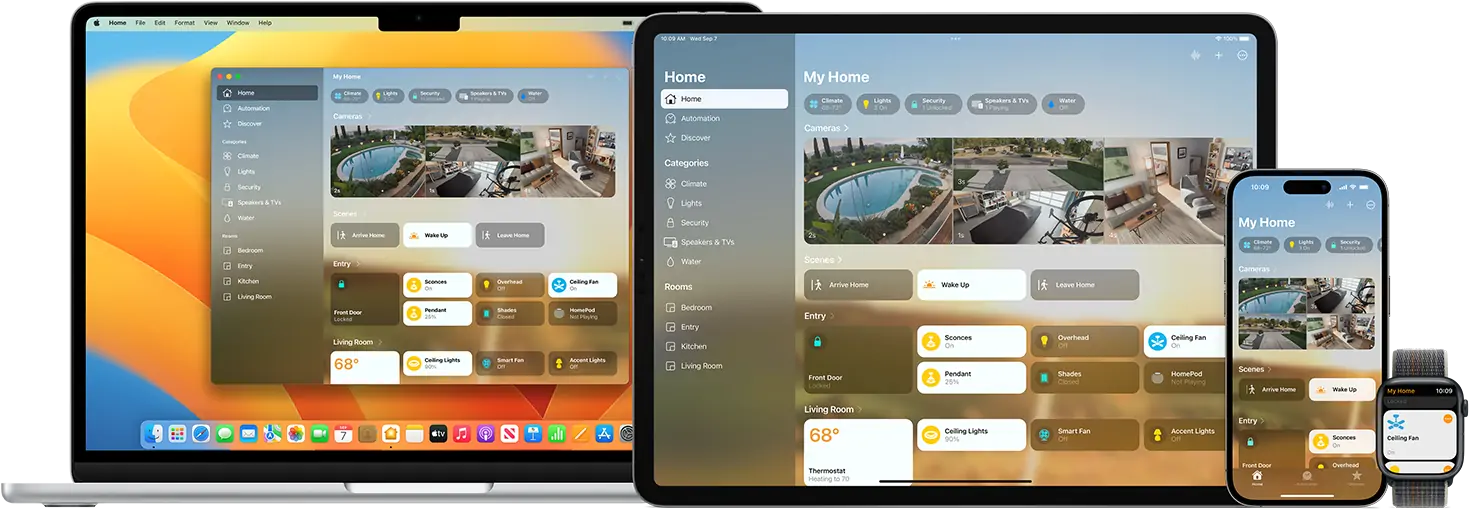
Apple Home today successfully delivers on every promise made since its 2014 announcement. iOS 18 brought thoughtful refinements that transformed already capable software into something truly excellent. Guest access lets you grant specific permissions to visitors without sharing your entire smart home setup. Robot vacuum support integrates cleaning routines seamlessly into existing automations, and each new addition solves problems users actually experience daily.
Thread support in iPhone 15 Pro and newer models fundamentally changes the entire setup experience. The phone itself becomes a Thread border router, eliminating the need for separate hub devices. Complex procedures that once required multiple hubs and careful network planning now happen automatically. The technology has finally become invisible to users, exactly as smart home technology should be.
Privacy Sets Apple Apart
Privacy remains Apple’s strongest differentiator in an increasingly connected and surveilled world. While competing platforms send usage data to cloud servers for analysis and advertising, Apple Home encrypts everything end-to-end by design. Apple literally cannot read your home data even if compelled by authorities. Your automation patterns, security camera feeds, and door lock codes remain completely private on your devices.
This privacy-first approach matters more each year as data breaches multiply and surveillance capitalism expands. Apple’s commitment to user privacy isn’t just marketing—it’s built into the technical architecture. Every decision prioritizes keeping your data yours alone.
The Platform Finally Works
The ecosystem has matured into something genuinely impressive and reliable for daily use. Over 50 major brands now offer Apple Home compatible devices across every imaginable category. Response times have dropped from frustrating multi-second delays to near-instantaneous reactions. The dreaded “No Response” errors that once appeared constantly have become genuinely rare exceptions.
The platform that frustrated users daily now works so smoothly that people forget it exists. Apple Home has achieved its ultimate goal of becoming so reliable and intuitive that the technology itself disappears. Users simply live their lives while their homes respond intelligently around them.
The Future Where Apple Home Becomes Invisible Magic
iOS 18.4 will require all remaining users to upgrade to the new architecture, marking the end of legacy support. Apple’s patience with maintaining old systems has clear limits, and those limits are fast approaching. By fall 2025, the original HomeKit architecture will disappear completely from all Apple devices. Any devices still running iOS 15 or earlier will permanently lose access to Apple Home functionality.
Matter Keeps Expanding
Matter continues expanding to include new device categories that promise even deeper home integration. Energy management devices join the standard next, bringing solar panels, EV chargers, and home batteries into the ecosystem. Your iPhone could soon route excess solar power to your car automatically based on calendar events and charging needs. The smart home evolves into an intelligent home making complex decisions autonomously.
Apple Intelligence integration seems not just likely but inevitable given current development trajectories. Large language models will probably replace today’s rigid command structures with natural conversation. Home automations will adapt dynamically to your actual behavior patterns rather than following schedules programmed months ago. Your home will learn preferences through observation and anticipate needs before you realize them.
Is No Interface The Best Interface?
The ultimate goal extends far beyond controlling devices through apps and voice commands. Ideal homes should adjust temperature as you move between rooms, lock doors automatically when you leave, and create perfect lighting for any activity. No apps to open, no commands to speak, no conscious interaction required. The best technology works invisibly in the background of daily life.
Apple Home’s true success will be measured by how completely it vanishes from conscious thought. The platform’s evolution from awkward beginning to invisible future demonstrates how persistence and user focus transform messy starts into elegant solutions. Technology should enhance life without demanding attention, and that’s exactly what Apple Home now delivers.
